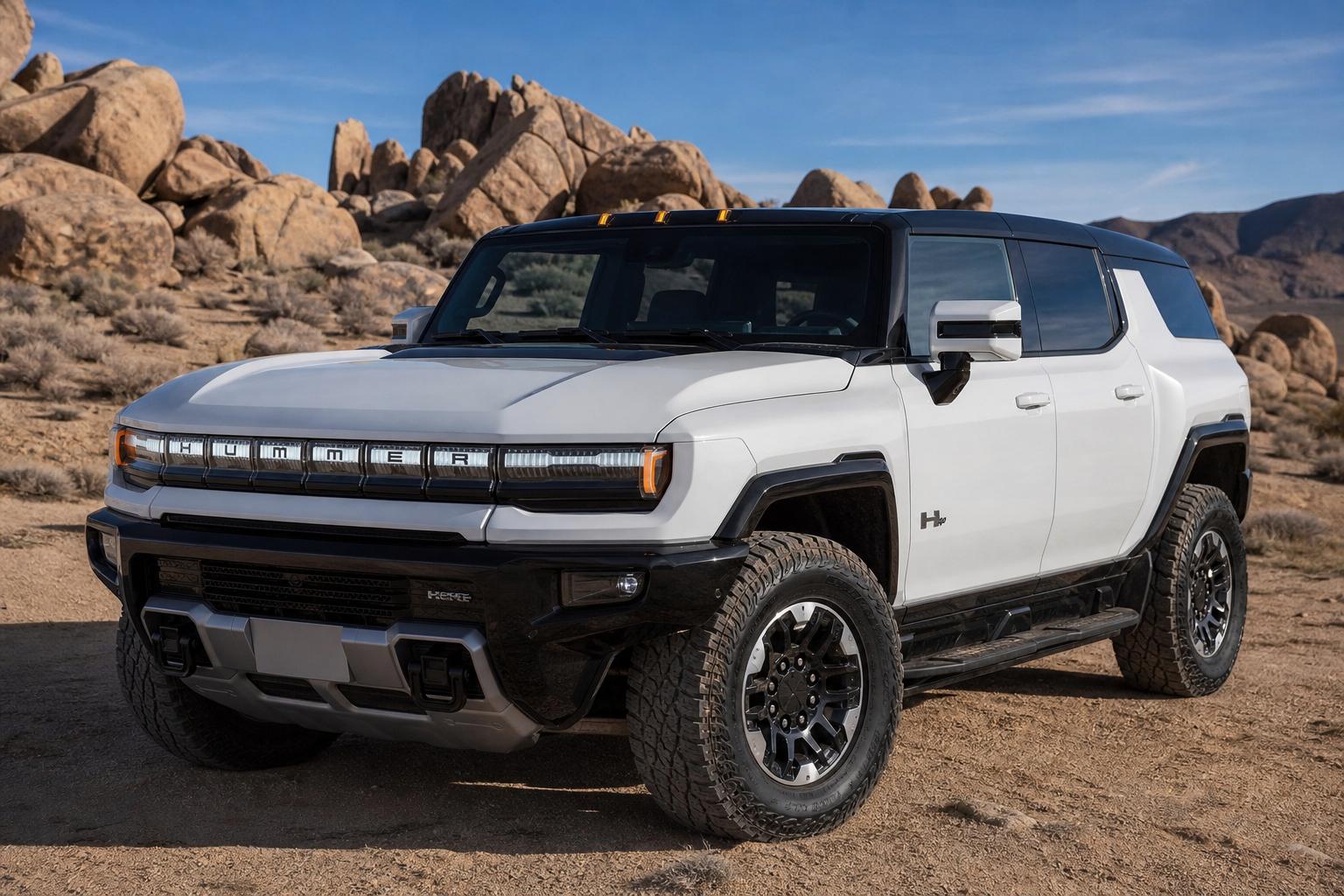
Hummer EV in Canada: The Ultimate Guide to GMC’s Electric Supertruck for Real Canadian Roads
If you’ve seen a GMC Hummer EV in the wild, you know it doesn’t sneak up on anyone. It’s a rolling statement: unapologetically big, packed with tech, and engineered to do things trucks weren’t supposed to do—like move diagonally. But is the Hummer EV a smart choice for Canadian drivers who face real winters, long distances, and the occasional goat track to a lakeside cabin? This in-depth guide unpacks what the Hummer EV is like to live with in Canada: charging, range, costs, off-road chops, urban practicality, regulations, and how it stacks up against rivals like the Ford F-150 Lightning, Rivian R1T, and Tesla’s entries. You’ll find clear answers, real-world tips, and the context you need to buy with confidence.
Meet the Hummer EV: What It Is—and What It Isn’t
The GMC Hummer EV is an all-electric, full-size luxury pickup (and SUV) that sits at the top end of the market for power, capability, and price. Built on GM’s Ultium platform, it pairs a massive battery with advanced motor control, four-wheel steering, adaptive air suspension, and plenty of party tricks. The best-known versions in Canada are the Hummer EV Pickup 3X and Hummer EV SUV. Most Canadian allocations to date have centred on higher-spec trims with three electric motors, though availability changes by province and dealer.
Two things set the Hummer EV apart immediately. First, capability: it’s designed to tackle serious off-road terrain with features like CrabWalk (diagonal driving at low speeds), Extract Mode (extra ride height for obstacles), and a suite of underbody cameras. Second, charging: the Hummer EV supports 800-volt DC fast charging and can accept high peak rates on 350 kW stations in ideal conditions. In short, it’s not a “me-too” electric truck. It’s a category-changer.
And yet, despite the nameplate’s legacy, this isn’t the old gas-guzzling Hummer reborn. It’s quieter, quicker, and cleaner at the tailpipe. The trade-off? It’s still very large, very heavy, and—by EV standards—thirsty on energy. If you’re considering a Hummer EV in Canada, you’re choosing a flagship. That comes with both standout strengths and practical compromises.
Canadian Availability, Ordering, and Pricing
The Hummer EV launched with limited availability and lengthy wait lists. Allocation for Canada is smaller than the U.S., so delivery timing can vary widely by dealer and province. If you’re serious, talk to multiple GMC dealers, ask about incoming allotments, and get waitlist positions in writing. Smart move: put your name down at more than one store if you’re flexible on colour or options.
Pricing in Canada lands well into six figures before taxes and fees. Exact MSRP varies by trim and model year, but the Hummer EV Pickup and Hummer EV SUV sit among the most expensive electric vehicles you can buy here. Expect luxury-car insurance rates, luxury-car repair costs, and a luxury-car buying process—extended warranties, protection packages, and significant freight/PDI line items.
Incentives matter for many EVs, but here’s the blunt truth: the federal iZEV program has price caps based on a vehicle’s MSRP, and the Hummer EV’s sticker is far above those thresholds. That means no federal rebate. Provincial programs add another layer—but they also have caps. As of 2024, Quebec and British Columbia offer provincial rebates for eligible EVs, subject to pricing and other criteria, but the Hummer EV’s MSRP is generally too high to qualify. Programs change often, so verify current rules with official sources. Either way, plan your budget without assuming an EV rebate will apply to a Hummer EV in Canada.
Powertrain, Performance, and the Stuff You Can Feel
The Hummer EV’s drivetrain is the headline. Higher trims use a three-motor setup (two motors at the rear, one at the front) delivering enormous power and torque. GMC’s marketing number of “up to 11,500 lb‑ft of torque” reflects wheel torque through gear reduction. The real takeaway is simpler: it’s fast. Launch control—branded Watts to Freedom—turns this nearly-four-tonne vehicle into a rocket, with 0–100 km/h figures that would embarrass sports cars a third its size.
More important for daily life, the Hummer EV is easy to drive at low speeds. Electric torque is immediate, the throttle is precise, and one-pedal driving quickly becomes second nature. Four-wheel steering dramatically tightens the turning circle for parking lots and trailheads. It won’t feel nimble like a compact SUV, but it’s far more manoeuvrable than its footprint suggests.
Ride quality? On pavement, the adaptive suspension smooths broken surfaces better than many traditional trucks. Off-road, the system can raise for obstacles, hunker down for stability, and keep the cabin calmer than you’d expect over washboard gravel. If your life includes snow-packed cottage roads, logging routes in B.C., or a construction site in Alberta, this suspension and motor control suite is the difference between “we should turn around” and “we’ll make it.”
CrabWalk, Extract Mode, and Other Party Tricks That Actually Matter
CrabWalk isn’t a gimmick. In tight trail sections, angled ditches, or urban situations like awkward laneway access to a garage, the ability to rotate the rear wheels in sync with the fronts at low speed helps the Hummer EV move diagonally to dodge obstacles. It’s situational, but when you need it, you really need it.
Extract Mode raises the suspension significantly—on the order of several inches—to clear rocks, deep ruts, or snow berms. Think of it as an escape hatch that saves your underbody from damage when a trail gets deeper or the plow bank at the end of your driveway turned into a small ridge overnight. Use it sparingly; the geometry changes and range efficiency suffer. But as a last resort, it’s valuable.
Undercarriage cameras and armour are the unglamorous heroes. With a vehicle this large, seeing what’s under you is priceless on trails or when cresting a sharp ledge. Skid plates protect expensive parts when you misjudge. You won’t brag about them at the pub, but you’ll remember them the first time they save you a four-figure bill.
Range and Efficiency: Realistic Numbers for Canadian Weather
Range figures for the Hummer EV depend on configuration, wheel/tire choice, and driving conditions. Official ratings vary by model year and test cycle, and Canadian NRCan ratings can differ from U.S. EPA numbers. What you need to know is practical: the Hummer EV generally offers long range thanks to a very large battery, but it’s not among the most efficient EVs. Big truck, big tires, big frontal area: physics shows up on your energy bill.
Owner-reported consumption commonly lands in the 35–50 kWh/100 km range depending on speed, temperature, and terrain. On a mild day at suburban speeds, expect the lower end. On winter highways at 110–120 km/h with a roof box or bikes, expect the higher end. It’s not unusual to see substantial winter range reductions in Canada—20 to 40 percent is a fair rule of thumb for cold weather at highway speeds for many EVs, especially big ones.
What about maximum range? With its biggest battery, the Hummer EV can deliver road-trip-worthy distances between charges in ideal conditions. But plan conservatively in winter and when towing. The combination of cold air, rolling resistance from winter tires, and heater use adds up. If you’re stretching a leg between Regina and Brandon at -25°C with a headwind, plot your DC fast charging stops tightly and precondition the battery.
Winter Strategies That Actually Work
Simple steps make a big difference. Precondition the cabin and battery while plugged in, even on Level 2 at home. Use seat and steering wheel heaters instead of blasting cabin heat. Keep highway speeds modest on frigid days. If you can, charge more often in winter and arrive at fast chargers with 10–30 percent state of charge; charging is faster in that window than topping up from 60 to 90 percent.
And a practical Canadian tip: snow-packed wheel wells waste energy and can rub on turns. Knock the slush out when you stop for coffee. It’s small, but on a heavy EV running big tires, the savings and smoother steering are noticeable.
Charging the Hummer EV in Canada
The Hummer EV supports multiple charging scenarios: slow (Level 1 household outlet), practical and fast for home (Level 2 wall charger), and road-trip quick (DC fast charging). The most important is Level 2 at home or work. If you’re considering a Hummer EV, plan your charging setup before the truck arrives.
Home and Workplace Charging: What to Expect
Level 2 charging on a 240-volt circuit is the sweet spot. Depending on the onboard charger configuration (varies by trim and model year), the Hummer EV can accept high AC rates—up to around 19 kW on certain versions. Many Canadian homes don’t have spare capacity for a full 80-amp circuit without an electrical service upgrade. A licensed electrician can assess your panel, run a dedicated circuit, and install a certified EVSE (charging station) in the garage or on an exterior wall.
Not every house needs a 19 kW solution. A 40- or 48-amp EVSE (roughly 9.6–11.5 kW) will still add substantial range overnight, which is how most Canadians charge. If you regularly return home near empty, winter highway commute daily, or plan to share the charger with a second EV, the higher-capacity setup will feel worth it. Otherwise, a mid-range Level 2 station paired with smart scheduling (charge when electricity is cheapest) is typically enough.
Condo and apartment dwellers in Canada: check your province’s rules and your building’s bylaws. Many strata or condo boards now support EV-ready upgrades with load management systems that prevent overloading the building’s electrical service. Expect an approval process and some lead time. In Quebec and British Columbia in particular, there are established pathways for strata/condo EV charging installations; the more you show up with a plan and quotes, the faster it moves.
Public Charging: CCS Today, NACS Tomorrow
On the road, the Hummer EV uses CCS fast charging. In 2025 and beyond, GM plans to roll out NACS (the Tesla connector) support via an adapter for access to Tesla Superchargers in Canada. That’s a big deal for route flexibility, especially across the Prairies and parts of Atlantic Canada where non-Tesla coverage can be spotty outside major corridors. For now, your planning will centre on CCS networks.
Peak DC fast speeds are excellent under ideal conditions. With an 800-volt architecture on certain trims, the Hummer EV can accept very high rates on 350 kW stations, allowing quick top-ups. As always, charging curves matter: even if you see a big peak number, the highest rates apply at lower states of charge and taper as the battery fills.
Major Canadian Fast-Charging Networks at a Glance
| Network | Connector(s) | Typical Power | Coverage Notes |
|---|---|---|---|
| Electrify Canada | CCS, CHAdeMO (limited) | Up to 350 kW | Urban hubs and major highways; strong 800V support |
| Petro-Canada | CCS, CHAdeMO | Up to 350 kW | Trans-Canada Highway coverage; good corridor options |
| FLO | CCS | Typically 50–100 kW, some higher | Widespread across cities; plenty of Level 2 as well |
| Circuit électrique (Hydro-Québec) | CCS, CHAdeMO | 50–180 kW, expanding | Best-in-class density in Quebec; improving on corridors |
| Ivy (Ontario) | CCS | Typically 50–150 kW | Good coverage along 400-series highways and Northern ON |
| BC Hydro / Greenlots | CCS, CHAdeMO | 50–100 kW | Key for smaller communities and rural British Columbia |
| Tesla Supercharger | NACS (adapter for Hummer EV planned) | Up to 250 kW | Excellent highway density; broader access expected from 2025 |
Pricing models vary—per kWh where permitted, per minute in some locations, or session-based fees. A practical planning number: fast charging often works out to roughly $0.40–$0.65 per kWh in Canada, depending on the operator and province. To keep costs down on long trips, arrive low, leave in the 70–80 percent range, and finish charging at your destination on Level 2 if possible.
How Fast Is “Fast”? Setting Realistic Expectations
GMC has stated that under ideal conditions, the Hummer EV can add around 100 miles (roughly 160 km) of range in about 10 minutes on a high-output DC fast charger. You’ll see the best results with a preconditioned battery, moderate ambient temperatures, and a state of charge below about 40 percent. Cold packs, headwinds, and towing lower those numbers. The good news: Canada’s DC fast charging landscape is maturing quickly, especially along core corridors from Windsor to Quebec City and throughout southern B.C.
Electricity Costs vs Gas: What You’ll Actually Pay
Energy cost is one reason many Canadians switch to EVs. Even a power-hungry truck like the Hummer EV usually beats a comparable gas vehicle on operating costs, especially if you charge at home.
- Quebec example: At roughly $0.07–$0.10/kWh for residential power, 40 kWh/100 km costs $2.80–$4.00 per 100 km. Even at 50 kWh/100 km on a snowy day, you’re around $3.50–$5.00 per 100 km.
- Ontario example: With off-peak time-of-use at roughly $0.08–$0.12/kWh and on-peak higher, plan for $3.20–$6.00 per 100 km at home depending on when you charge.
- BC example: Around $0.12–$0.14/kWh residential translates to roughly $4.80–$7.00 per 100 km at home.
- DC fast charging: At the rough $0.40–$0.65/kWh equivalent, 40 kWh/100 km comes out to $16–$26 per 100 km. Still often cheaper than fueling a big gas truck, but much more than home charging.
Electricity rates vary by utility and time of day. Real-world consumption varies by season, speed, and tires. The pattern is consistent though: home Level 2 is the lowest-cost plan, fast charging is a convenience premium, and even a large EV undercuts most gas trucks on fuel spend over time.
Towing and Payload: What the Numbers Mean on the Highway
GMC lists towing ratings that place the Hummer EV below heavy-duty diesels but squarely in light-duty territory. Depending on configuration, the Hummer EV Pickup has been rated up to around 8,500 lb, and the Hummer EV SUV around 7,500 lb (manufacturer figures vary by year and build). That’s plenty for most recreational trailers, boats, and sled haulers, but not a fit for large fifth-wheels or multi-axle car haulers. Payload is similarly adequate for adventure gear and tools but not aimed at commercial contractors who max out trucks daily.
Two realities of towing with an EV deserve emphasis:
- Range drops a lot. The usual ballpark for EVs is 30–50 percent less range when towing at highway speeds, depending on trailer size, shape, and weight. A low-profile aluminum snowmobile trailer is one thing; a tall box camper is another.
- Trip time goes up. You’ll stop more often for DC fast charging, and you’ll want to target stations with easy trailer access. Unhitching every two hours is a quick way to ruin a road trip. Apps that show pull-through chargers and wide lots are gold.
Smart setup helps. Use a weight-distributing hitch if required, keep speeds reasonable, and stick to aerodynamic trailers when possible. Pre-plan charging on corridors with 350 kW stations for best results. For cottage weekends within a few hundred kilometres of home, the Hummer EV tows comfortably and confidently; for trans-Canada adventures with a tall camper, build a conservative itinerary and be prepared to adapt.
Size and Everyday Practicality: Can It Fit Your Life?
The Hummer EV is wide and heavy—comparable to or larger than many HD pickups. Before you sign, measure your garage and the turn-in from your street or alley. Parkade height restrictions are a real consideration in downtown Toronto, Vancouver, Calgary, and Montreal. With roof racks or gear boxes, you may be flirting with clearance bars in older parkades. Verify access at your office or condo before delivery day.
On the upside, four-wheel steering shrinks the parking-lot pain and makes U-turns far easier than the footprint suggests. The MultiPro tailgate is genuinely useful if you’re loading bikes, lumber, or a bulky cooler. The pickup’s bed is shorter than a traditional long-box truck, but workable for weekend projects and adventure gear. The Hummer EV SUV trades bed length for an enclosed cargo area and slightly shorter overall length—welcome news for urban owners who still want the capability.
Tech and Safety: Super Cruise and Everyday Smarts
GM’s Super Cruise driver-assist is among the most polished hands-free highway systems available in Canada. On mapped divided highways, it’s a set-and-relax feature that reduces fatigue (but still demands alertness). Automatic lane changes feel natural, and the in-cabin attention system is less naggy than some competitors. If your life involves long stretches of the 401, Trans-Canada, or Autoroute 20, Super Cruise is valuable.
Cabin tech is modern, with large screens, trail-cam views, and configurable drive modes. One-pedal driving is smooth, and regenerative braking quickly becomes the default around town. Over-the-air updates and app integrations continue to improve, though service availability can vary by region and dealer support. Safety ratings and detailed crash-test data evolve over time; check current results from Canadian and U.S. authorities when you buy.
Off-Road in Canada: Where Capability Meets Etiquette
The Hummer EV’s off-road hardware is overbuilt for cottage trails and logging roads, which means you can drive at a relaxed pace and focus on your line rather than tiptoeing. Air suspension, four-wheel steer, torque vectoring, armour, and big tires take the edge off ruts and rocks. If your weekends include Crown land in Northern Ontario, service roads in the Kootenays, or washed-out tracks on the Avalon Peninsula, it’ll feel like cheating.
Capability comes with responsibility. Respect seasonal closures, stick to existing tracks to prevent erosion, and watch your speed past campsites and hikers. Pack out what you pack in. On shared-use areas like Quebec’s multi-use trails or Alberta public land, sound carries; even quiet EVs can surprise people. Use your horn sparingly and announce with lights on blind bends. It’s not just good manners—it keeps trails open for everyone.
Maintenance, Service, and Reliability
EVs carry fewer moving parts than gas trucks, and there’s no oil to change. Tires and brakes take the brunt of a heavy vehicle’s wear. Regenerative braking helps pad life, but the Hummer EV’s mass and acceleration mean tires won’t last as long as on a compact crossover. Budget accordingly for quality winter tires and replacements every few seasons if you drive spiritedly or tow.
Dealer support matters on a flagship model. Choose a GMC dealer with EV certification and a track record with Ultium-platform vehicles. Ask about parts lead times for body repairs and glass—specialized components on low-volume models can take longer to source. Keep software up to date, and if you plan hard off-road use, schedule periodic underbody inspections for peace of mind.
Insurance, Registration, and Rules That Catch People Out
Insurance premiums for a Hummer EV in Canada will typically be higher than for mainstream EVs due to MSRP, repair complexity, and parts costs. Shop multiple providers, ask about winter tire discounts, telematics, and multi-vehicle bundling. If you’re switching from an older truck, confirm replacement cost coverage and glass riders; those roof panels and cameras aren’t cheap.
Registration is straightforward, but mind local rules on vehicle modifications and lighting. Weight restrictions posted in older parkades or on some low-volume bridges may apply; always respect signage. Ferries in B.C., Newfoundland and Labrador, and the Maritimes typically charge by length and height rather than weight, but verify your route if you’re towing or carrying rooftop gear.
Condo and Strata Charging in Canada: Getting to “Yes”
If you live in a condo in Toronto, Vancouver, Calgary, or Montreal, you’ll need a plan. Most boards now have policies for adding EV charging. Expect to provide a load calculation, a proposal from a licensed electrician, and a commitment to pay for installation and electricity. Many buildings opt for shared networked Level 2 stations with usage billing, which works fine for a Hummer EV if you can plug in often. Overnight access to a dedicated Level 2 spot is ideal, but shared charging with a consistent routine is workable. Be patient; governance takes time, and early movers often help shape the building’s EV policy for years to come.
Environmental Footprint: An Honest Conversation
There’s no way around it: the Hummer EV is a very large EV with a very large battery. Compared to a compact electric hatchback, the cradle-to-gate footprint is higher. If you need extreme capability, towing, and space, the Hummer EV replaces a thirsty gas truck with something quieter and far cleaner in daily operation, especially on Canada’s increasingly low-carbon grids in provinces like B.C., Quebec, Manitoba, and Ontario. If you don’t need this much truck, a smaller EV will have a lighter footprint and cost less to run. The point is not to moralize—it’s to match the tool to the job.
How the Hummer EV Compares to Other Electric Trucks in Canada
Choices are expanding. Here’s how the Hummer EV stacks up against common alternatives you’ll find (or soon find) across Canada.
| Model | Character | Strengths | Considerations |
|---|---|---|---|
| GMC Hummer EV (Pickup/SUV) | Flagship, off-road-focused luxury EV | Extreme capability, 4-wheel steer, 800V fast charging, Super Cruise | High price, heavy, lower efficiency, large footprint |
| Ford F-150 Lightning | Everyday-friendly full-size EV truck | Familiar platform, good dealer network, frunk utility | Range varies with config, DCFC speeds vary by trim |
| Rivian R1T | Adventure-focused midsize/full-size crossover truck | Strong off-road modes, clever storage, refined road manners | Limited dealer presence, service logistics vary by province |
| Chevrolet Silverado EV | Practical full-size with long-range options | Ultium platform, strong towing in certain trims | Availability ramping, bed and cab options vary by launch phase |
| Tesla Cybertruck | Polarizing design, high-tech | Supercharger access, structural storage | Availability and service details evolving in Canada; size/visibility |
If you prioritize off-road hardware and tech theatre, the Hummer EV leads. If you want maximum practicality and dealer footprint, the F-150 Lightning and Silverado EV are compelling. For a slightly smaller footprint and sharp dynamics, the Rivian R1T is worth a test drive where available. Try them all if you can. Specs tell one story; the seat of your pants tells the rest.
Buying New vs Used in Canada
New Hummer EVs move through dealer allocations, and some buyers may find lightly used models on the market. With a used Hummer EV, request a service history, confirm software is current, inspect underbody armour and suspension components, and check for wheel/tire damage (big wheels are pothole magnets). If it’s an ex-demo or media vehicle, ask for documentation of usage; those often see spirited test drives.
For both new and used, scrutinize the charging equipment included, roof panel condition (if applicable), spare key availability, and accessory lists. A thorough walkaround with the cameras and underbody view is worth the time. Finally, consider an extended warranty through GM for peace of mind with complex electronics on a flagship model.
Accessorizing a Hummer EV for Canadian Life
Winter tires are non-negotiable. Choose a load-rated set that matches the truck’s weight and driving style. A good set will transform braking grip and steering precision on cold pavement and packed snow. Consider:
- Mud flaps and paint protection film to manage salt and gravel rash.
- All-weather mats and a cargo liner—spring thaw is a mess.
- A high-quality Level 2 EVSE with Wi‑Fi for scheduling and usage tracking.
- A tonneau cover for the pickup to reduce drag and protect gear in rain and snow.
- Recovery boards and a proper tow strap if you explore remote areas.
Keep rooftop accessories minimal in winter to reduce wind drag. If you must carry skis or a box up top, factor in the clearance for urban parkades and the penalty to highway range.
Road-Trip Planning: Across Provinces Without Drama
Canada is big. The Hummer EV can cross it—you just need a plan. Think corridor-to-corridor: Windsor–Quebec City and Vancouver–Okanagan–Calgary are straightforward with modern CCS. Northern routes are improving but still require more care. Build your itinerary around high-power stations where possible, and identify L2 backups in towns with community centres or hotels in case a fast charger is busy or out of service.
Precondition the battery by setting a DC fast charger as your navigation destination—many EVs warm the pack automatically for best charging speeds. In cold snaps on the Prairies, arrive with 10–20 percent remaining rather than running to 0; you’ll charge faster and have buffer if a station is down. Apps from the major networks plus community-powered tools help you verify station status and pull-through access for trailers.
Frequently Overlooked Costs and Considerations
A few line items buyers forget to budget for:
- Electrical upgrades: a 200-amp service upgrade can be necessary in older homes if you want a high-amp EVSE and have electric heating or other large loads.
- Tires: quality winter and summer sets for a heavy EV aren’t cheap; price them before you buy.
- Storage: if you remove roof panels, you’ll want safe storage space. Protect them properly.
- Parking: downtown parking spaces can feel tight; measure twice, especially in older buildings.
- Trailer charging: some DC stations don’t support trailer pull-through. Scout locations in advance when towing.
Who Should Buy a Hummer EV in Canada?
If this is your first EV and you just need an A-to-B commuter, the Hummer EV is overkill. If you want a flagship electric truck for real off-road use, winter confidence, highway comfort, and technology that still feels futuristic after the novelty wears off, it’s squarely in your lane. It suits buyers who:
- Regularly drive to cottages, ski hills, trailheads, or job sites where capability matters.
- Value fast DC charging and plan long interprovincial trips.
- Have dedicated home Level 2 charging (and ideally, a garage or driveway wider than average).
- Prefer a bold design and don’t mind being the conversation starter at every fuel stop—sorry, charging stop.
Not you? Consider a mid-size EV SUV for urban life, or a more conventional electric pickup if you want a full-size truck without the supertruck theatrics.
Quick Tips for a Smooth First Year
- Install your Level 2 EVSE before delivery. Test it with a neighbour’s EV if possible.
- Learn the charging curve. Stop around 80 percent on road trips for better time efficiency.
- Use driver profiles and save a winter mode with gentler throttle and max regen.
- Keep a compact emergency kit: gloves, hat, traction aids, and a small shovel. You’ll help others more than yourself, but you’ll be glad it’s there.
- Check wheel torque and tire pressures monthly, especially after off-roading or big temperature swings.
Final Take
The GMC Hummer EV is an electric supertruck that makes Canada’s worst weather and roughest roads feel smaller. It’s expensive, large, and not shy about its appetite for electrons, but it’s also uniquely capable and genuinely enjoyable to drive. If the fit is right—and you’ve thought through charging—there’s nothing else quite like it on sale here. If you’d rather keep things practical and understated, Canada now offers several excellent electric trucks and SUVs that hit a different target. Either way, the days of compromising capability to go electric are over. The Hummer EV proves it.
FAQ
Does the Hummer EV qualify for Canadian EV rebates?
Generally no. The federal iZEV program has MSRP caps that the Hummer EV exceeds. Provincial programs in Quebec and B.C. also have price limits that usually exclude the Hummer EV. Always verify current rules, but plan your budget without incentives for this model.
What’s the real Hummer EV range in Canadian winters?
Plan conservatively. Owner reports suggest consumption often rises into the 40–50 kWh/100 km range at highway speeds in sub-zero weather. Factor a 20–40 percent winter hit from ideal conditions, more if towing or driving into strong headwinds. Preconditioning and moderate speeds help.
How fast can the Hummer EV charge on Canada’s DC fast networks?
On high-power 350 kW CCS stations with a warm battery, it can add significant range quickly—GMC cites roughly 160 km in about 10 minutes under ideal conditions. Real-world speeds vary by station, temperature, and your state of charge. Arrival between 10 and 30 percent is the sweet spot for fast sessions.
Is the Hummer EV practical for city living in Toronto, Vancouver, or Montreal?
It can be, but plan for its size. Four-wheel steering helps with tight turns, yet older parkades and narrow laneways can be challenging. Confirm home charging access and garage/parkade clearances before buying. If you rarely leave the city and don’t need a truck, a smaller EV is easier to live with.
What’s the towing capacity of the Hummer EV?
Depending on configuration, the Hummer EV Pickup has been rated by GMC up to around 8,500 lb, and the Hummer EV SUV around 7,500 lb. Always check the specific rating for your build and model year. Expect range to drop significantly when towing at highway speeds.
Will I be able to use Tesla Superchargers with a Hummer EV?
GM has announced a transition to the NACS (Tesla) standard and access via an adapter beginning in 2025. That should open a large portion of the Supercharger network in Canada to compatible Hummer EVs. Until then, you’ll use CCS fast chargers from networks like Electrify Canada, Petro‑Canada, and others.
How much does it cost to charge a Hummer EV at home in Canada?
At typical residential rates, many owners pay between roughly $3 and $7 per 100 km when charging at home, depending on province, time-of-use, and driving conditions. Fast charging on the road is more expensive—often $16–$26 per 100 km—so most owners keep it to road trips and occasional top-ups.
Can I install a Level 2 charger in a condo?
Often yes, but you’ll need board approval and a plan. Many condos in B.C. and Quebec already support EV charging with load management. In other provinces, the process is growing more common. Bring quotes from licensed electricians and be ready to discuss electrical capacity and cost allocation.
How does the Hummer EV compare to the Ford F-150 Lightning and Rivian R1T?
The Hummer EV is the most extreme on off-road tech and fast-charging capability, with a higher price and larger footprint. The F-150 Lightning is more conventional and broadly supported by dealers. The Rivian R1T offers sharp dynamics and clever storage in a slightly smaller package, though service coverage varies by region.
What should I budget for tires?
Quality, load-rated winter and all-season or summer tires for a heavy EV are a significant expense. Prices vary by brand and size, but expect more than you’d pay for a compact SUV. Shop early each season for availability and consider road hazard warranties given the truck’s weight.